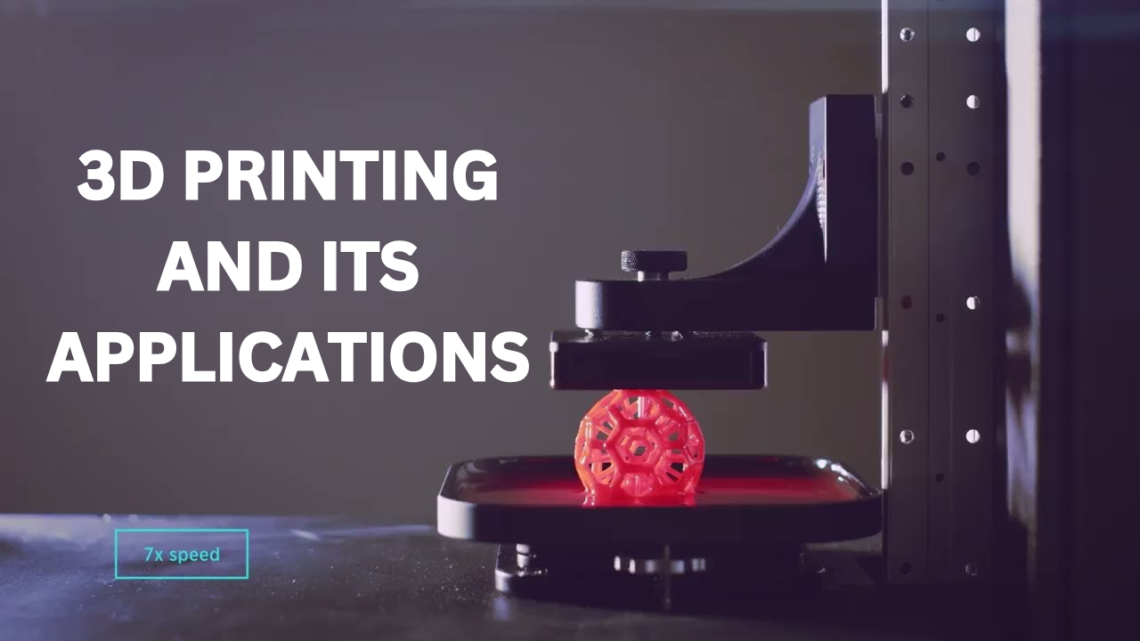
3D printing, also known as additive manufacturing has emerged as a groundbreaking technology revolutionizing how we create and innovate in various industries by transforming digital designs into tangible objects layer by layer it offers unprecedented flexibility and precision initially popularized for prototyping 3D printing has expanded into diverse fields such as healthcare automotive aerospace architecture and even food production in healthcare it allows for the creation of customized implants prosthetics and even bio printing of tissues drastically improving patient outcomes in the automotive and aerospace industries 3D printing enables the production of lightweight complex parts that improve performance and reduce costs.
Architects are using it to construct models with intricate designs that were previously impossible to achieve with traditional methods beyond industrial use 3D printing has also made its way into the consumer market offering DIY enthusiasts educators and small businesses the ability to produce personalized products and tools with its rapid advancements 3D printing has opened up a world of possibilities making it an essential technology that continues to shape the future of manufacturing healthcare and beyond as this technology evolves its applications will only expand reshaping how we approach creation production and even problem-solving.
History of 3D Printing:
The history of 3D printing dates back to the early 1980s when it was first conceptualized as a means to create prototypes for industrial design the earliest form of this technology was invented by Chuck Hull in 1983 that uses ultraviolet light to solidify liquid resin layer by layer forming a 3D object Hull’s invention marked the birth of 3D printing leading to the establishment of 3D Systems the first company to commercialize the technology throughout the 1980s and 1990s 3D printing remained largely confined to specialized industries particularly manufacturing where it was used for rapid prototyping
As technology advanced so did the range of materials used in 3D printing from plastics and metals to ceramics and even food the 2000s saw a surge in interest and investment and by 2005 the project an open-source initiative was launched with the goal of creating a 3D printer that could print its own parts paving the way for more affordable and accessible printers in the 2010s 3D printing began to find applications in a wide variety of fields from healthcare where it enabled the production of custom prosthetics and implants to architecture where it facilitated the creation of complex building structures.
Types of 3D printing Technologies:
There are several types of 3D printing technologies each with its own unique method of turning digital designs into physical objects the most common and widely used types include Fused Deposition Modeling (FDM) Selective Laser Sintering (SLS) and Digital Light Processing (DLP) among others FDM is perhaps the most accessible and affordable often used in home-based printers where a thermoplastic filament is heated and extruded layer by layer to create objects SLA on the other hand uses an ultraviolet laser to cure liquid resin into solid layers known for its high precision and smooth finish making it popular in industries like jewelry and dentistry SLS uses a powerful laser to fuse powdered material such as nylon or metal together in a layer-by-layer process.
DLP is similar to SLA but uses a digital projector to flash an image of each layer onto the resin surface enabling faster printing speeds other technologies such as Electron Beam Melting (EBM) and Laminated Object Manufacturing (LOM) also offer specialized applications with EBM using an electron beam to melt metal powder for creating strong high-performance components particularly in aerospace and medical fields these different 3D printing technologies allow for a broad range of applications from rapid prototyping and manufacturing to creating intricate designs and highly customized products in industries like healthcare automotive and fashion.
Benefits of 3D Printing:
3D printing offers a wide array of benefits that are transforming industries and everyday life one of its most significant advantages is its ability to enable rapid prototyping designers and engineers can quickly turn digital models into physical prototypes allowing for faster iterations and more efficient product development this can save both time and money as companies no longer need to rely on costly and time-consuming traditional manufacturing processes like molding or tooling another key benefit is customization 3D printing allows for the creation of highly personalized items from custom prosthetics and implants in healthcare to tailored clothing and accessories in fashion.
It also reduces material waste by using only the exact amount of material needed for each object making it an environmentally friendly option compared to traditional subtractive manufacturing techniques 3D printing has revolutionized the supply chain by enabling localized production, allowing products to be made on demand rather than relying on centralized factories and long shipping routes this can lead to faster delivery times and reduced costs particularly in industries that require bespoke or low-volume items.
Future of 3D Printing:
The future of 3D printing holds tremendous promise with its potential to revolutionize even more aspects of manufacturing, healthcare and daily life as technology continues to evolve we can expect 3D printing to become faster more affordable and capable of using an even wider range of materials in manufacturing it is poised to drastically change how products are designed, produced and distributed traditional supply chains often reliant on mass production and long-distance shipping may be replaced with localized on-demand production systems reducing waste and carbon footprints in healthcare the future could see 3D printing being used for the creation of fully customized medical implants prosthetics and even organs.
Which involves printing human tissues and organs is another exciting frontier with the potential to address the shortage of donor organs and revolutionize transplant medicine the construction industry is also exploring large-scale 3D printing for building homes and infrastructure potentially making construction faster cheaper and more sustainable in aerospace the ability to print lightweight complex components will continue to push the boundaries of design and efficiency leading to advancements in space exploration and commercial aviation as materials science progresses 3D printing could incorporate metals composites and even sustainable materials like recycled plastics.