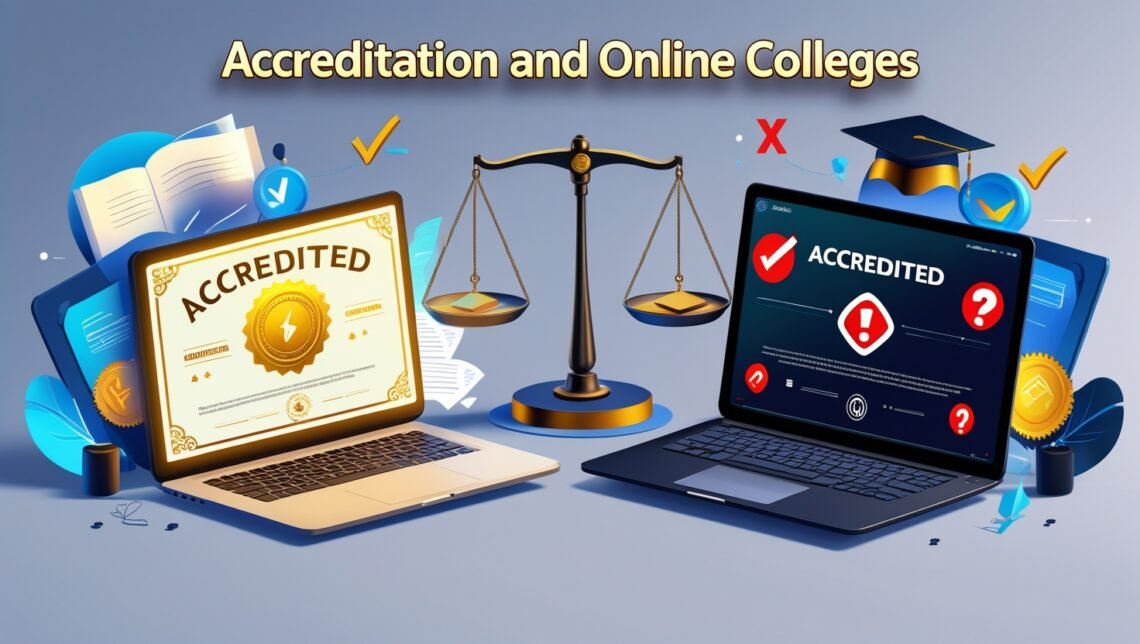
In today’s digital age, earning money has become so easy that anyone can earn a degree or diploma from online colleges. But along with this ease, it is important to take care of one very important thing, which is “accreditation.” Accreditation means that a college or university has been verified by an authorized agency that it maintains the quality of its education services and providing genuine education to the students. This is a kind of quality assurance process that assures students, parents, and employers that the degree or certificate you are getting is based on reality and is valid in the market.
In the case of online colleges, the importance of accreditation is even more important because there are many platforms on the internet that offer fake or substandard courses. Therefore, students should choose institutions that are properly accredited for their education so that their hard work and investment are not wasted. Accreditation not only enhances the value of the degree but also gives students transfer credits, admission to higher education, and better opportunities in the job market.
In this blog, we will talk in detail about the different types of accreditation, its importance, and how it is checked whether the online college you are going to take admission in is accredited or not. So that you can take better and informed decisions during your difficult journey.
Types of Accreditation: Regional, National, and Programmatic:
There are three major types of accreditation: regional, national, and programmatic. Each one has its role and importance that students should understand when choosing an online college or university. Regional accreditation is the highest standard and most widely accepted. It is mostly offered to academic institutions that offer undergraduate and graduate degrees. In the US, six major regional agencies manage this accreditation. If you earn a degree from a regionally accredited college, your degree is more valuable, and transfer credits are more easily accepted.
National accreditation is usually given to vocational, technical, and career-based programs. These institutions provide short-term diplomas, certifications, and practical training. This type of accreditation is useful, but its credits may not be accepted at every regional college, so it’s a point to consider if you’re planning a transfer or higher studies in the future.
Programmatic accreditation is for a specific program or department, such as engineering, business, nursing, or law. It’s given by specialized agencies, such as ABET for engineering or AACSB for business. It simply means that your program meets industry standards.
It is important to understand these three types so that you can make the best decision according to your career goals. Each type of accreditation has its importance, and you should choose the institution according to your personal needs.
Why Accreditation Matters for Students and Employers:
Accreditation is proof of the quality of a college or university’s education. It is not only important for students but also an assurance for employers that the degree or certification of the candidate they have presented is genuine and up to standard. When a student earns an education from an accredited institution, he or she receives a high-quality curriculum, qualified instructors, and proper academic support. This has a direct bearing on his or her learning outcomes and professional skills.
Employers also look at the degree of a job applicant to see if his or her degree is from an accredited institution or not. If the degree is not accredited, they may not take the candidate seriously or reject the application. Accredited degrees are also required for professional licenses, certifications, and government jobs. Many employers and licensing boards only accept accredited programs.
Accreditation also ensures that students are eligible for financial aid, scholarships, and student loans. Government and private financial institutions often only support institutions that are accredited. If you join a non-accredited college, not only may your degree be worthless, but you will also not get financial support.
Therefore, whether you are preparing for a job or planning for higher education, accreditation holds great importance for your academic and professional future.
How to Verify Accreditation Status of an Online College:
Before joining an online college, it is very important to check whether the institution is accredited or not. Often, people just look at the website or trust the advertisement, but it is very easy to verify the actual accreditation status if you know the right method. The first step is to go to the official website of the college in which you want to take admission and see the accreditation section. But just having it written on their website is not enough; you should also check it.
The U.S. Department of Education (DOE) and the Council for Higher Education Accreditation (CHEA) are the two official organizations that maintain the list of accredited institutions. You can visit their websites and check if your chosen online college is included in their list or not. These are trusted sources that provide you with updated and genuine information.
If a college or university is making fake claims for its accreditation, you can find out the truth from these sources. Often, fraudulent colleges use fancy names or refer to unofficial agencies that are not approved by any recognized body.
This process of verifying accreditation takes only a few minutes, but it makes your future secure. You should always complete this step before admission so that your hard work, time, and money are not wasted on any fake degree.
Risks of Attending Non-Accredited Online Colleges:
Getting admission in non-accredited online colleges can be a matter of very serious risks. The first and biggest risk is that your degree has no legal or professional value. Often, students take admission in such institutions just because of low fees or fast-track programs, but later they realize that their degree is not valid for any employer or university. Due to this, neither are you eligible for higher education, nor do you get good jobs.
The second risk is of financial loss. Non-accredited colleges often charge high tuition fees to students but do not provide the facilities, support, or quality education that an accredited institution provides. In such colleges, you do not get financial aid, loans, or scholarships, which means you are wasting your resources without any guarantee.
The third major issue is mental stress. When you realize that your hard work has been wasted and the degree is of no use, it leads to frustration and disappointment. Apart from this, using fake degrees can also lead to legal problems, such as cases of job fraud or document forgery.
It is very important to understand and avoid all these risks. Always choose an institution that is recognized and accredited so that your future is secure and you can take pride in your education.
Conclusion:
Nowadays when online education has become very popular, it has become even more important for students to understand that their chosen institution is accredited. Accreditation is not just a certificate, it is a guarantee that the skills you are achieving are up to the standards and your degree can have an impact on your career. In this blog, we have discussed what accreditation is, what its different types are, why it is important for students and employers, how it is verified, and what the risks of non-accredited colleges are.
If you are planning to join an online college, then first of all, you must do your research. Do not just look at websites or rely on advertisements. Use official sources like DOE and CHEA, and always cross-check if your institution is accredited or not. This small effort can save you from huge financial and professional losses.
Education is an investment of time, hard work and money. If it is not invested in the right place then you only suffer losses. Hence, it is the duty of every student to take an informed decision. When you choose a college by considering the accreditation aspect, you not only secure your future but also take the first step towards a strong and successful career.
FAQs:
- What is accreditation and why is it important for online colleges?
Accreditation is a process through which a college or university is evaluated by a recognized agency to ensure it meets certain quality standards in education. For online colleges, this is crucial because many institutions online may be offering fake or substandard programs. Accreditation ensures that the degree you earn is valid, recognized by employers, and useful for further studies or job opportunities. - What are the different types of accreditation?
There are three main types of accreditation:
Regional Accreditation: The highest and most widely accepted form, usually for academic institutions offering bachelor’s and master’s degrees.
National Accreditation: Common for vocational, technical, and career-based programs, but credits may not transfer easily to regionally accredited colleges.
Programmatic Accreditation: Applies to specific programs like engineering, nursing, or business, ensuring they meet industry standards. - How can I verify if an online college is accredited or not?
You can check the accreditation status of an online college by visiting its official website and looking for the “Accreditation” section. However, don’t just rely on what’s written there. Visit official websites like the U.S. Department of Education (DOE) or the Council for Higher Education Accreditation (CHEA) to confirm if the college is listed as accredited. - What are the risks of enrolling in a non-accredited online college?
Attending a non-accredited college can lead to several risks such as:
Your degree may not be accepted by employers or other institutions.
You may not be eligible for financial aid, scholarships, or student loans.
You risk losing time, money, and effort.
Using such degrees can even result in legal trouble, especially if used for job applications. - Why do employers care about accreditation?
Employers value accreditation because it confirms that the candidate received a quality education from a legitimate institution. Many companies, licensing bodies, and government departments only recognize degrees from accredited colleges. Without proper accreditation, your degree may be considered invalid, making it harder to get hired or advance in your career.